For many families, the start of a new year marks a big milestone. It is when a child learns to ride their first bike 🚲.
It’s an exciting moment, but it’s also one of the most misunderstood stages of childhood development. Learning to ride isn’t just about pedalling ahead. It’s about mastering steering, balance, awareness of surroundings, and physical endurance, all at the same time.
That’s a lot for a small body and a growing brain.
Understanding what kids actually struggle with is crucial. Providing the right support can turn bike riding from a frustrating experience into a confidence-building one. This sets them up for long-term success.
Why Learning to Ride Is Harder Than It Looks
From an adult’s perspective, riding a bike feels automatic. For kids, it’s one of the most complex physical skills they’ll learn early in life.
When a child gets on a bike for the first time, they’re trying to coordinate:
- Steering the handlebars accurately
- Pedalling consistently
- Balancing their body weight
- Looking ahead instead of down
- Reacting to people, paths, and obstacles
- Managing fatigue they’ve never felt before
All of this happens while their muscles, reflexes, and spatial awareness are still developing.
That’s why patience and the right setup matters more than speed.
The First Big Challenge: Steering Without Overcorrecting
One of the earliest hurdles kids face is steering control.
New riders tend to:
- Over-turn the handlebars
- Fixate on the front wheel
- Panic when the bike drifts slightly
This causes wobbling, sudden stops, or tipping, not because the child lacks ability. It happens because their brain hasn’t yet learned how subtle steering inputs affect balance.
Why steering takes time to master
Steering a bike requires anticipation, not reaction. Kids must learn to gently guide the bike rather than sharply turning it. This skill only develops through repetition and repetition only happens when kids feel safe enough to keep trying.
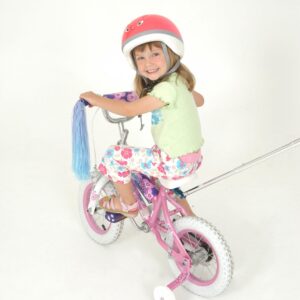
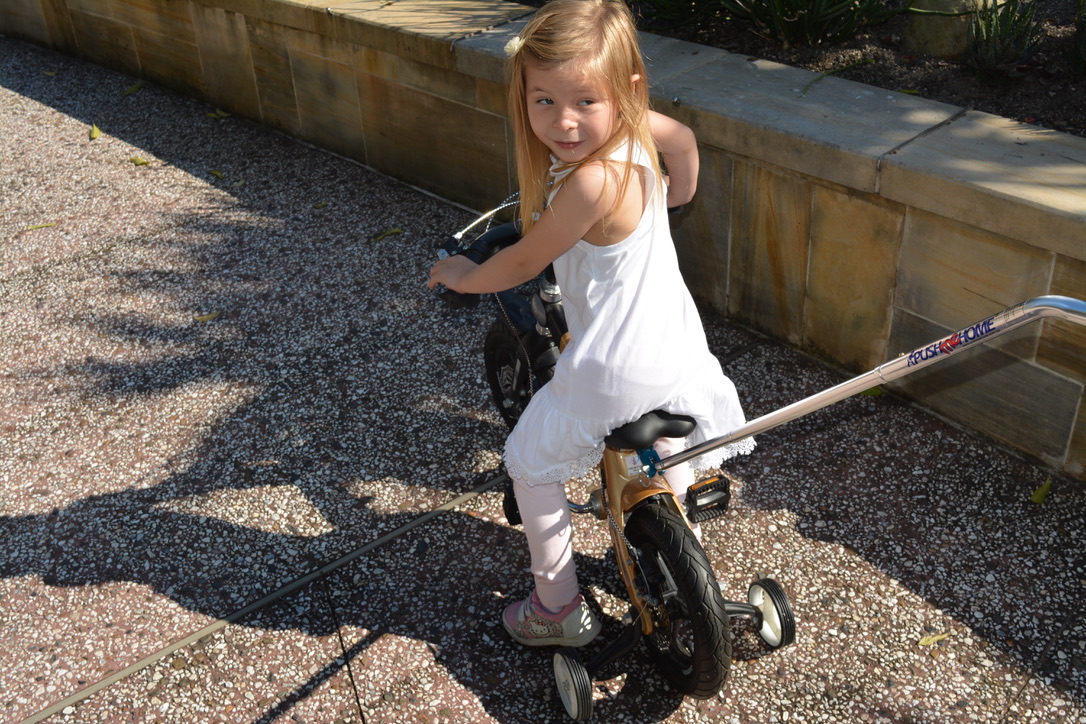
This is where balance wheels paired with a push handle are incredibly effective. Balance wheels offer lateral stability. Children learn steering control in this way. A push handle allows parents to correct direction gently. They can do this without grabbing handlebars or interfering from the front.
Learning to Pedal While Looking Around the Environment
Another major milestone is teaching kids to look up.
Many new riders pedal while staring at:
- Their feet
- The pedals
- The front wheel
This limits their awareness and makes steering harder.
Why environmental awareness matters
Real riding involves:
- Watching where you’re going
- Avoiding people and obstacles
- Staying on paths
- Anticipating turns
For kids, lifting their gaze while pedalling is not instinctive it has to be learned.
Parents often try to shout instructions (“look ahead!”), but verbal cues alone rarely work in the moment. What does work is allowing kids to ride while parents quietly manage speed and direction from behind.
With a push handle, parents can:
- Slow the bike while kids focus on looking up
- Steer gently if attention drifts
- Keep rides calm instead of chaotic
This allows kids to build environmental awareness naturally, without fear.
Why Kids Get Tired So Quickly on New Bikes
One of the most common surprises for parents is how fast kids tire out on their first bike.
This happens because:
- Pedalling uses muscles they haven’t developed yet
- Balance requires constant micro-adjustments
- Mental focus drains energy quickly
- Heat and excitement amplify fatigue
A child who looks energetic suddenly stops pedalling altogether.
Fatigue isn’t failure it’s development
Early tiredness is normal. It doesn’t mean a child isn’t ready; it means their body is learning.
The mistake many parents make is either:
- Ending rides too early every time, or
- Pushing kids to continue when they’re exhausted
The ideal solution is flexibility.
A push handle allows parents to take over when legs give out, without ending the ride or creating frustration. Kids still feel involved, and parents avoid carrying bikes home a win for everyone.
Why Balance Wheels + Push Handle Work So Well Together
There’s often debate between balance bikes, training wheels, and pedal bikes. In reality, the best learning setup for many kids involves using a pedal bike. It should have balance wheels and a push handle.
What balance wheels give
- Side-to-side stability
- Confidence during steering practice
- Reduced fear of falling
What a push handle adds
- Parent control of speed and direction
- Support when kids tire
- Gentle guidance without interference
- Safer riding in parks and busy paths
Together, they allow kids to focus on skills rather than survival.
As confidence grows, balance wheels can be removed. The push handle is gradually used less. This creates a smooth transition to independent riding.
How Push Me Home® Makes the Learning Process Easier
The Push Me Home® Bike Handle was designed specifically for this learning stage. It serves not as a shortcut, but as a support system.
Key benefits include:
- Upright posture for parents — no bending or back strain
- Telescopic handle — adjustable for different heights
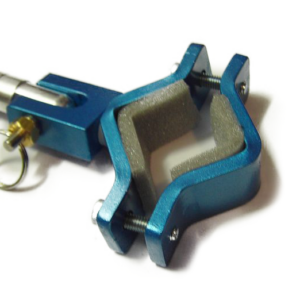
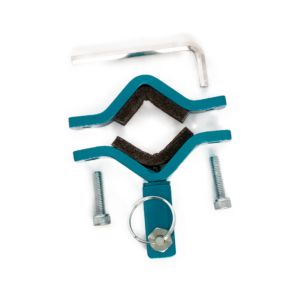
- Universal clamp — fits most kids’ bikes
- Quick attach/detach — clamp stays on, handle clicks in seconds
- Natural guidance — kids steer and pedal, parents help quietly
Instead of interfering, the handle supports skill development at the child’s pace.
Practical Tips to Help Kids Master Riding in 2026
1. Choose open, predictable spaces
Flat paths and quiet parks reduce cognitive load so kids can focus on skills.
2. Keep sessions short
10–15 minutes early on builds stamina without frustration.
3. Let kids steer, you guide
Avoid holding handlebars. Use a push handle to help subtly from behind.
4. Expect fatigue
Plan for tired legs and use the handle to extend rides calmly.
5. Celebrate awareness, not speed
Praise looking ahead, steering smoothly, and staying balanced not how fast they go.
Frequently Asked Questions
What age should kids start riding a bike?
Most children start between 2–5 years old, depending on readiness. Confidence matters more than age.
Are training wheels still useful?
They can help early on. A push handle can be paired with them to teach steering. This combination also helps teach balance at the same time.
How long should first rides last?
Start with 10–15 minutes, gradually increasing as stamina improves.
Will the Push Me Home® handle fit my child’s bike?
Yes. The universal clamp fits most children’s bikes, and a trike clamp is available for tricycles.
Start 2026 with Confidence (For Kids and Parents)
Learning to ride a bike is one of childhood’s great milestones but it doesn’t have to be stressful.
With the right setup, kids learn:
- Steering control
- Environmental awareness
- Balance and coordination
- Endurance at their own pace
And parents gain:
- Control without interference
- Fewer meltdowns
- Less physical strain
- More enjoyable family outings
👉 Discover the Push Me Home® Bike Handle. It has been trusted by parents for over 20 years. It makes first rides safer, easier, and more fun.
Final Word
Every confident rider starts with support. In 2026, give your child the freedom to learn and give yourself the tools to guide them well.